
How much noise you are in
Quiet home, or busy cafés and groups? How much background noise you deal with sets the technology level you need, far more than the brand does.
There are eight leading hearing aid brands in Australia, and TellyHear fits them all: 56 models from $1,690 to $4,300 per aid. If you do not know your Oticon from your Widex, you are in the right place.
Most people come to us without a brand in mind, and that is completely fine. The badge matters far less than these six things. Get them right and any of our eight brands can be a great choice for you.
Quiet home, or busy cafés and groups? How much background noise you deal with sets the technology level you need, far more than the brand does.
Behind-the-ear is the popular all-rounder. In-the-ear hides inside completely. We match the shape to your ears and what is easy to handle.
Most of our hearing aids charge overnight like a phone. No tiny, fiddly batteries to change every few days.
Take calls and hear the TV straight in both ears, streamed from an iPhone or Android.
The part that matters most. Every device is programmed to your own hearing by Lachlan, so it sounds right for you.
A 45-day money-back trial, a 3-year warranty, and free adjustments for as long as you wear them.
The leading names in hearing, engineered around the world. Tap any brand to see its full range and prices.
Known for an open, natural sound approach that keeps the whole scene around you, rather than narrowing to one voice.
$2,485 to $4,300 per aid
View rangeKnown for discreet styles, and technology aimed at following conversations that move between several people.
$1,690 to $3,300 per aid
View rangeOffers technology built for challenging, noisy environments, plus broad phone and Bluetooth connectivity.
$2,295 to $2,995 per aid
View rangeA simpler, more approachable option that shares core technology with its sister brand Phonak.
$2,300 to $3,450 per aid
View rangeOften considered by people who prioritise a natural sound, and offers dedicated tinnitus-support features.
$1,800 to $3,700 per aid
View rangeAdds wellbeing features like activity and fall detection on supported models, alongside its hearing technology.
$2,380 to $3,200 per aid
View rangeKnown for connectivity and newer streaming standards, with an extra in-ear microphone on some models.
$2,245 to $3,145 per aid
View rangeShares GN sound technology with sister brand ReSound, wrapped in its own care and service ecosystem.
$2,795 to $3,695 per aid
View rangeTwo things worth knowing before you compare them, then the honest story behind each brand.
The right choice depends on your hearing loss, the situations where you struggle, the shape of your ears, your comfort preferences, your phone and other devices, whether you experience tinnitus, and how the hearing aids are fitted and adjusted for you.
Every major manufacturer approaches sound differently, and a feature that works brilliantly for one person may matter very little to another. We would rather explain the differences clearly so you can make an informed choice.
This is surprisingly useful, because several brands that look like competitors actually sit under the same parent groups.
| Brand | Origins | Owned by | Area of emphasis |
|---|---|---|---|
| Oticon | Denmark, 1904 | Demant | Broad sound access, spatial awareness, BrainHearing |
| Signia | Launched 2016, Siemens heritage from 1878 | WS Audiology | Conversations, own voice, discreet design-led styles |
| Phonak | Switzerland, roots to 1947 | Sonova | Speech in difficult noise, Bluetooth, Roger ecosystem |
| Unitron | Canada, 1964 | Sonova (since 2000) | Simplicity, real-world fitting feedback, flexible trials |
| Widex | Denmark, 1956 | WS Audiology | Natural, low-delay sound, tinnitus tools |
| Starkey | USA, 1967 | Privately held | AI, health and safety features, custom hearing aids |
| ReSound | Roots to 1943 | GN Hearing | Connectivity, spatial sound, natural hearing |
| Beltone | Chicago, 1940 | GN Hearing | GN technology with a separate care and service ecosystem |
Signia and Widex are sister brands under WS Audiology. Phonak and Unitron are both Sonova brands. ReSound and Beltone are both GN Hearing brands. Ownership note: in March 2026 GN agreed to sell its hearing business, including ReSound and Beltone, to Amplifon, with the sale expected to complete by the end of 2026.
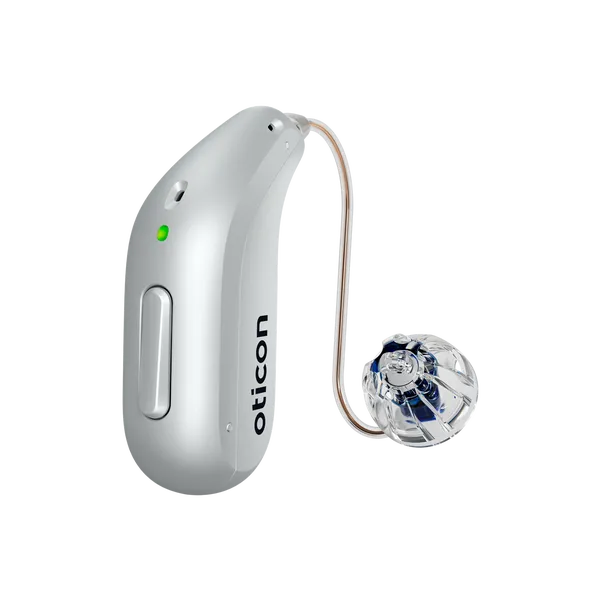
Oticon was founded in Denmark in 1904 after Hans Demant sought a hearing solution for his wife, Camilla. Today it is part of the Danish hearing-health group Demant and remains one of the longest-established hearing aid brands.
The central idea behind Oticon’s technology is called BrainHearing. Rather than treating hearing as simply making sounds louder, Oticon designs its hearing aids around giving the brain useful access to speech and the surrounding sound environment. Its modern hearing aids use neural-network processing to recognise complex sound scenes, and some systems also use information such as head and body movement to understand how you are interacting with people around you.
In everyday life, Oticon generally emphasises keeping you aware of the people and sounds around you rather than shutting everything out except one voice. That may appeal to someone who wants a spacious, natural sense of their surroundings.
Known for
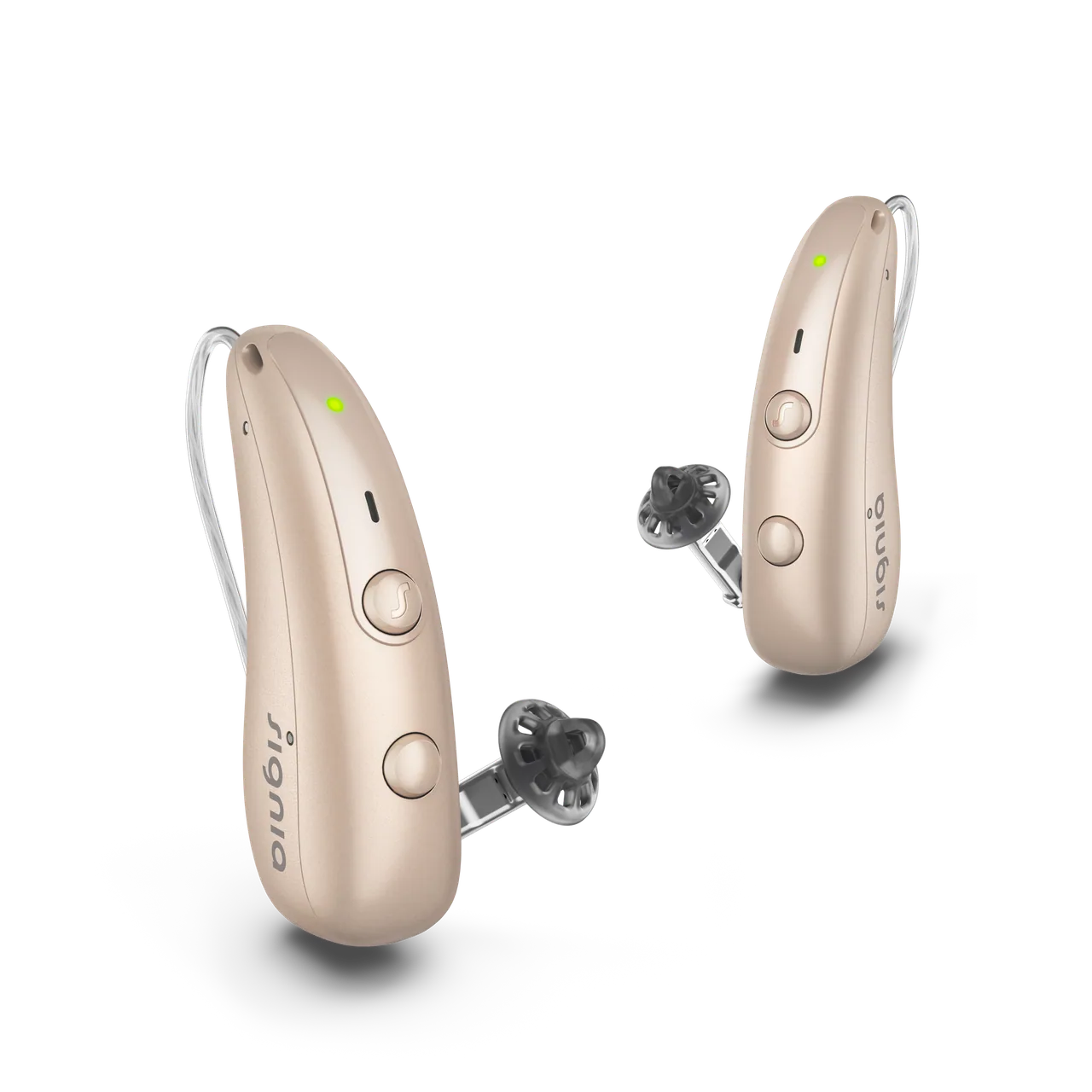
Signia is a newer brand than the name might suggest. It launched in 2016, taking over the heritage and hearing technology of the former Siemens hearing-aid business, whose roots reach back to Werner von Siemens and electrical amplification in 1878. Today Signia is part of WS Audiology, alongside Widex.
One of Signia’s main technical focuses is following conversations that move between several people. Its Integrated Xperience system continually analyses a conversation and adjusts as different people speak, rather than assuming you only want to hear one fixed person in front of you.
Signia also developed Own Voice Processing, which separately recognises the wearer’s own voice. This matters because first-time hearing-aid users can find their own amplified voice unusually loud or unnatural. The brand also puts real effort into physical design, with behind-the-ear devices, custom in-ear models, and unusually slim, earbud-like styles.
Known for
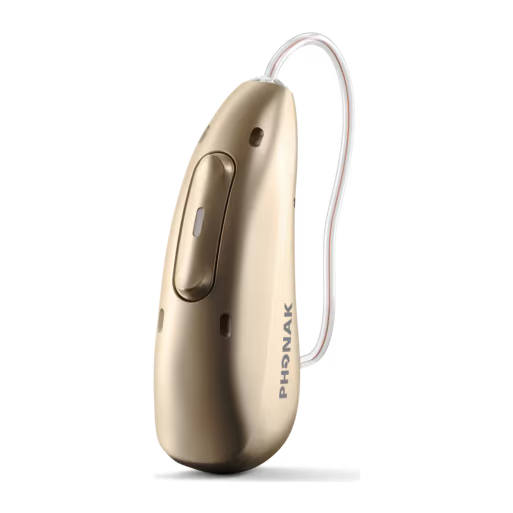
Phonak is a Swiss hearing brand whose company roots date to 1947. It is the flagship hearing-aid brand of Sonova, based in Stäfa, Switzerland. Sonova also owns Unitron.
Phonak has long concentrated on understanding speech when conditions are difficult, including busy restaurants, groups, distance and competing voices. Its newer premium technology uses a dedicated AI processor on certain models to separate speech from background noise in real time. That processor is on specific models rather than the whole range.
Connectivity is another genuine strength. Current Phonak devices pair with a particularly broad range of Bluetooth devices, both Apple and Android, with some supporting up to eight paired devices and two at once. Phonak also has the Roger system of external wireless microphones, which can be placed near a speaker or worn by them and sent straight to the hearing aids. That can help across a table, in meetings or lectures, where distance and noise make hearing aids alone struggle.
Known for
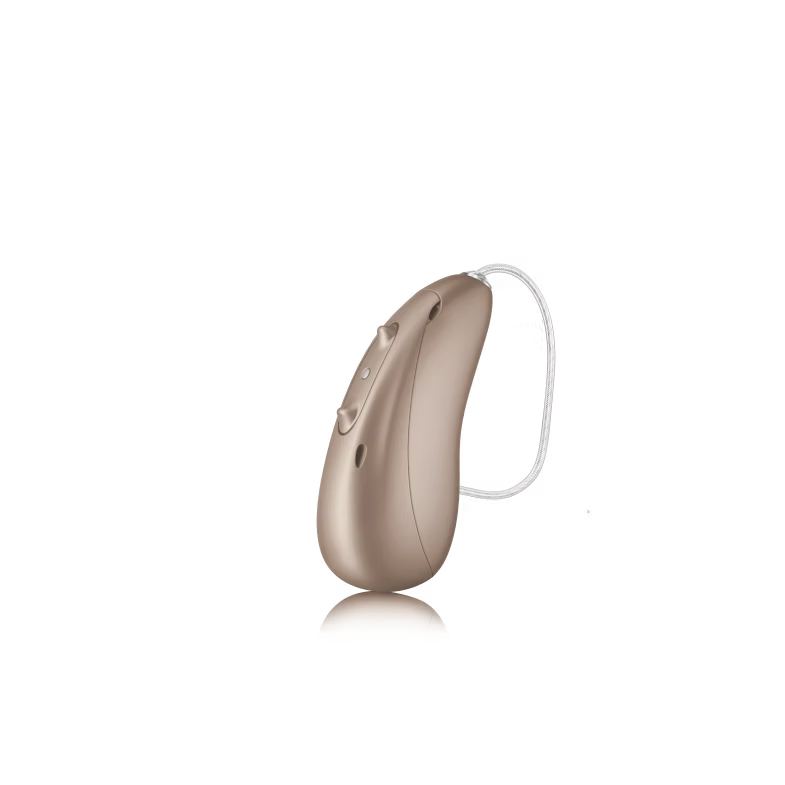
Unitron began in Newfoundland, Canada in 1964, before moving its headquarters to the Kitchener-Waterloo region of Ontario. It became part of Sonova in 2000, making it a sister brand to Phonak.
Unitron’s more meaningful distinction is the experience around the hearing aid. Its FLEX:TRIAL system lets participating hearing professionals program trial devices so people can test amplification in their real lives before committing. Its Log It All system records the kinds of listening environments a wearer actually spends time in, while Ratings lets users report how well they heard in a particular situation. That information helps the clinician refine the fitting.
Current Unitron technology also includes universal Bluetooth connectivity and modern automatic sound processing.
Known for
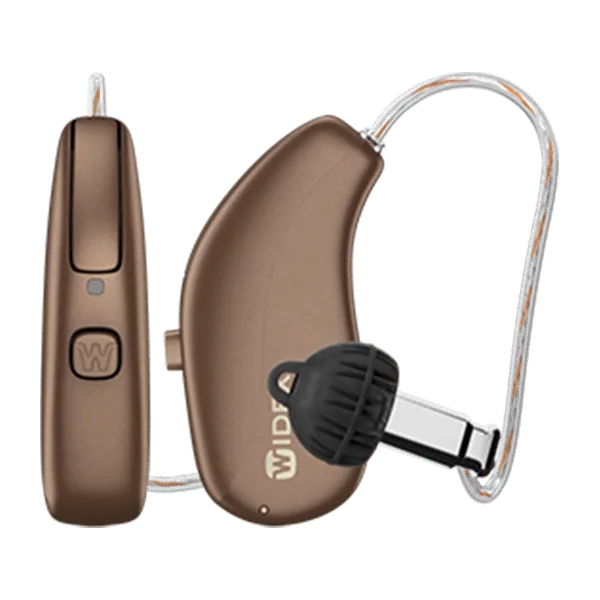
Widex was founded in Denmark in 1956 by the Tøpholm and Westermann families. It remained family owned for decades before combining with Sivantos in 2019 to create WS Audiology, which now owns both Widex and Signia.
Widex has built much of its technology around reducing the small processing delay created when a hearing aid picks up, processes and reproduces sound. Its PureSound system uses ZeroDelay technology to reduce that delay, particularly for people with mild to moderate hearing loss. The aim is to reduce the artificial or slightly echo-like quality that some wearers notice when processed sound mixes with sound entering the ear naturally.
Widex also has one of the more developed tinnitus-support ecosystems among the major manufacturers. Its Zen system uses random, chime-like tones, while SoundRelax provides additional fractal sound programs intended for relaxation and tinnitus management. These are tools for managing tinnitus, not a cure.
Known for
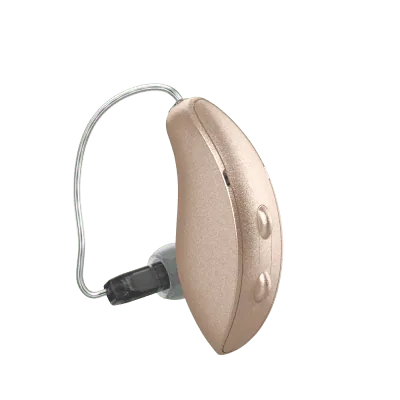
Starkey is different organisationally from most of these brands. It is a privately held American hearing technology company based in Eden Prairie, Minnesota. Bill Austin acquired Starkey Laboratories in 1967, and the company remains independently owned rather than sitting inside one of the large European hearing groups.
Starkey was an early mover in putting motion sensors and artificial intelligence into hearing aids, and it still places unusually strong emphasis on features beyond amplification. Depending on the hearing aid and app, the My Starkey system can track steps and activity, provide balance tools, detect possible falls and send alerts to chosen contacts, give reminders, and translate spoken languages.
Its current technology also uses neural-network sound processing and modern Bluetooth LE Audio and Auracast connectivity. These extra features depend on the particular model and app, rather than every Starkey hearing aid doing everything.
Known for
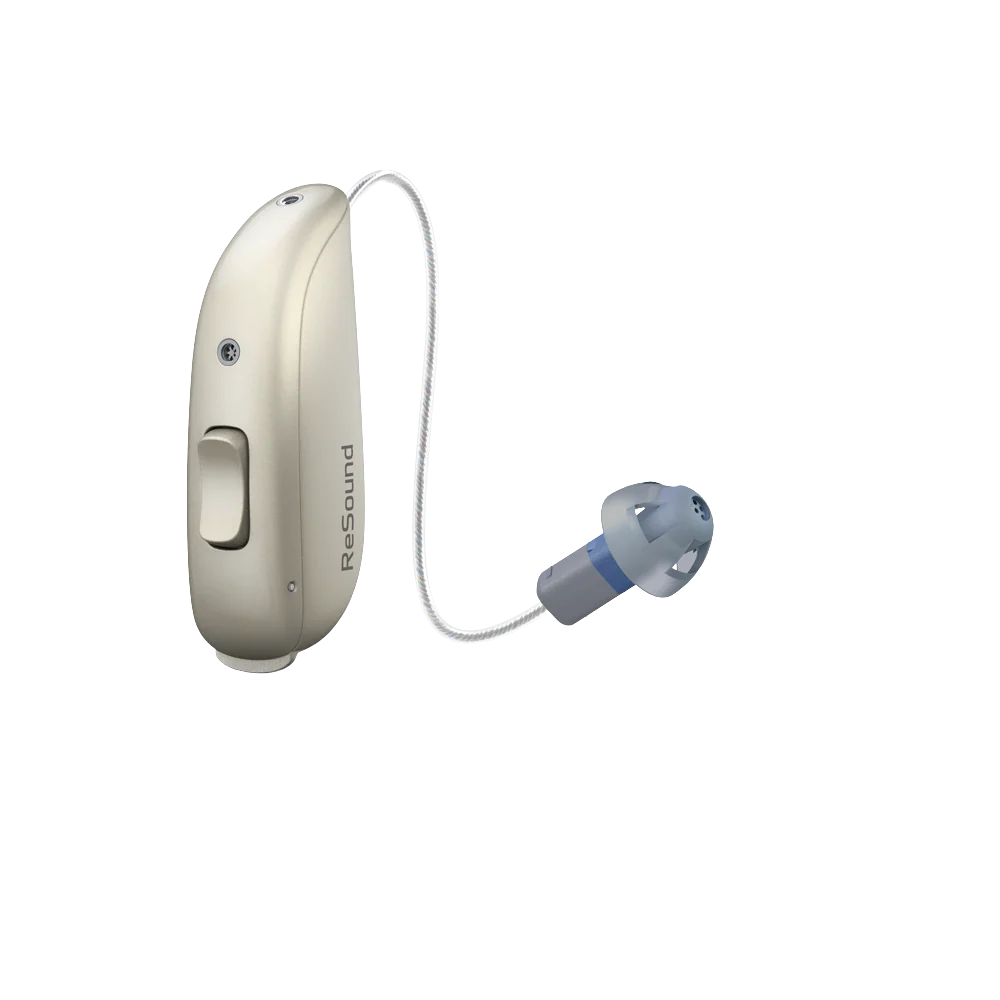
ReSound traces its hearing-aid heritage back to 1943 and is currently part of GN Hearing, a Danish audio and hearing technology group.
Connectivity is one of ReSound’s most defensible historical strengths. It helped introduce direct 2.4 GHz wireless connectivity to hearing aids and was behind the first Made for iPhone hearing aid with direct stereo streaming. More recently, GN was first to put Bluetooth LE Audio and Auracast into a hearing aid. Auracast is designed to eventually let hearing aids connect directly to compatible public audio systems in places such as airports, theatres, churches and conference venues.
ReSound’s Organic Hearing philosophy emphasises preserving spatial cues and keeping you aware of your surroundings. Some designs also use M&RIE, which adds a microphone inside the ear canal. By using the natural shape of the outer ear to collect sound, it aims to preserve more natural information about where sounds are coming from.
Known for
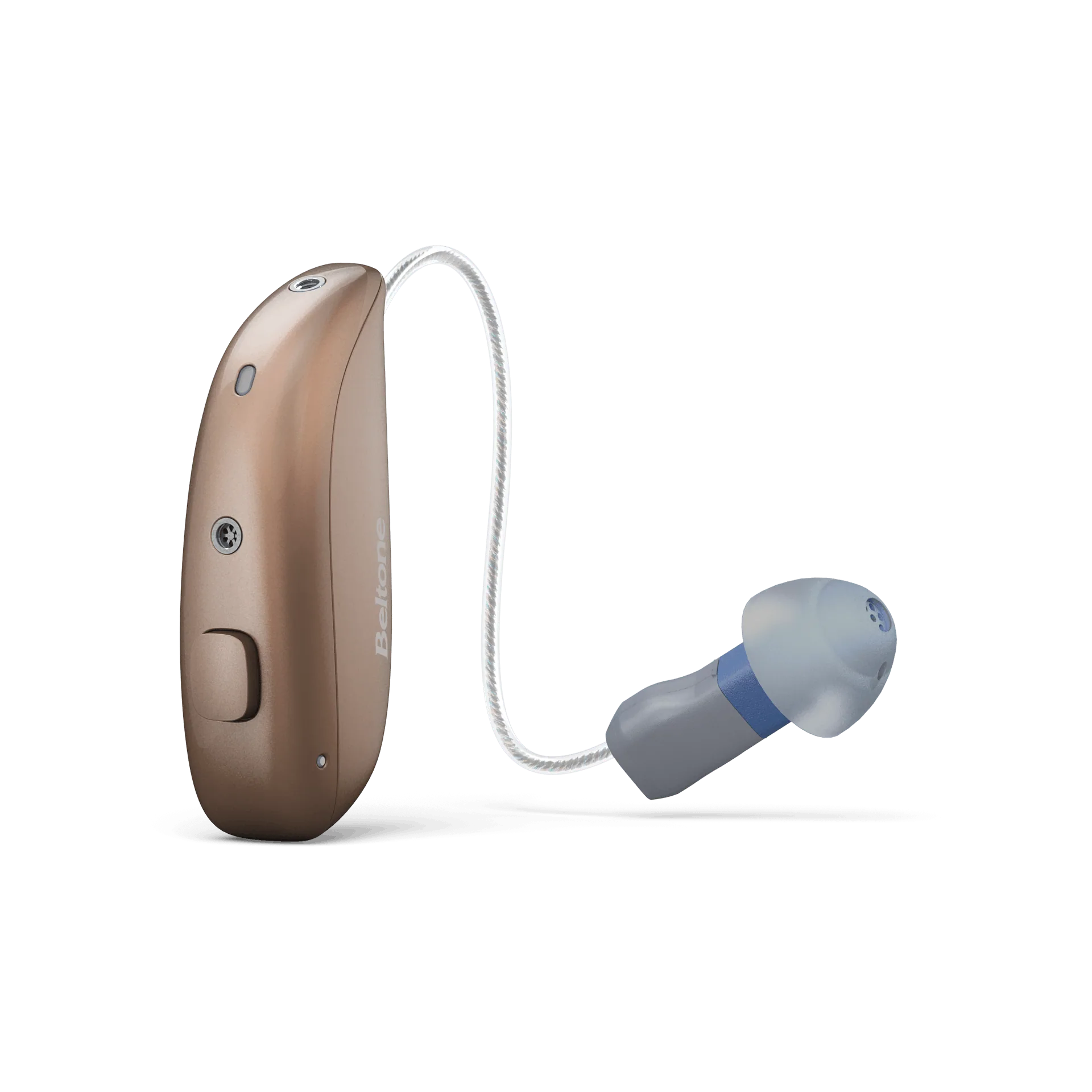
Beltone began in Chicago in 1940, founded by Sam and Faye Posen after Sam began developing smaller, more personalised hearing devices. It is now part of GN Hearing, which also owns ReSound.
GN has historically launched corresponding ReSound and Beltone products using closely related technology. GN itself describes ReSound as its technology-led premium brand, and Beltone as combining GN technology with a strong focus on hearing care and service.
Modern Beltone hearing aids therefore share many themes found in ReSound products, including natural sound processing, AI-based noise reduction, Bluetooth LE Audio, Auracast and compatible wireless accessories, but use Beltone’s own branding, software and care ecosystem.
Known for
The things that actually matter, backed by real numbers.
Wear them in your real life. If they are not right, send them back for a full refund within 45 days, backed by a 3-year warranty. There is no risk in trying.

Lachlan, a member of Audiology Australia, personally programs and fine-tunes every device to your own hearing. Never a factory preset.
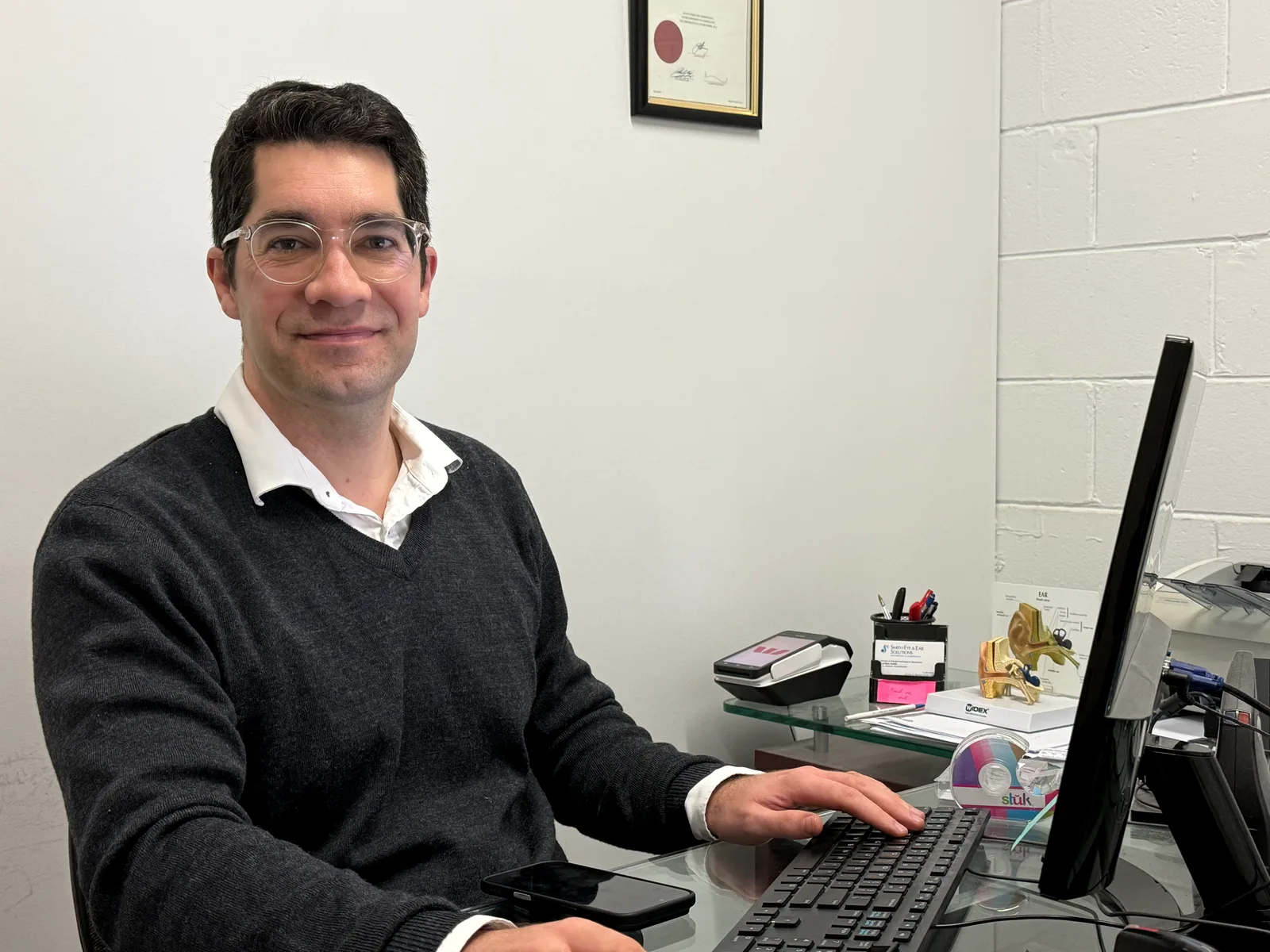
Real, verified Google reviews from Australians we have genuinely helped hear better. Read every one for yourself, and the same care continues long after your hearing aids arrive, anywhere in Australia.
Pensioner, veteran or concession card holder? You may be covered through the Australian Government Hearing Services Program. See funding options
There isn’t a single best brand for everyone. The right choice depends on your hearing loss, the situations you struggle in, your ear shape, your phone, the features you want and your budget. That is exactly what we help you work through.
No. The technology level and how well the device suits you matter far more than picking the most expensive brand. A mid-range aid fitted well can easily outperform a top-tier one that isn’t right for you.
Several premium ranges specialise in hearing speech in noise. Phonak and Signia are useful places to start, but the technology level you choose and a proper fitting matter just as much as the brand.
Most current models offer some smartphone compatibility, though it varies by model. Phonak is particularly strong for broad Bluetooth compatibility. Check the individual product page, or ask us, for your exact phone.
For the most hidden fit, look at Signia’s Silk and custom in-ear styles, and other in-the-ear options we stock. We’ll show you the most discreet choice for your ears and hearing.
Widex has dedicated tinnitus-management features such as Zen and SoundRelax. Tinnitus should still be properly assessed, so mention it and we’ll factor it into your fitting.
It’s generally not recommended. A matched pair from the same brand is designed to work together and share settings. If you have a specific reason to mix, Lachlan will talk it through with you first.
You’re not on your own. You can ask us for help before you buy, and Lachlan reviews and programs every device as part of the fitting. You also have a 45-day money-back period if it isn’t right for you.
No. Most people don’t, and that’s completely normal. Tell us about your hearing and your life, and we’ll narrow it down with you.
I purchased my hearing aid online late last year. I was a bit apprehensive about making such an important and expensive purchase without having the backup of a local clinic. I needn’t be worried.
Leigh Christensen, 3 months ago
I obtained a full auditory test from Lachlan after becoming quite dissatisfied with my previous specialist. New hearing aids were purchased and a series of small issues were effectively solved at short notice.
Bob Collins, 5 months ago
You will receive highly attentive professional service. This is my experience after 4 other audiologists. You will find Lachlan — the audiologist — is extremely patient and accommodating.
Mano Markovic, 3 months ago
Outstanding service again from Lachlan, looking after both my hearing needs and sight testing in one appointment. Nothing was too much trouble.
Payl Phillips, 5 months ago
Thank you for the assistance and helpful advice regarding my ear problem. I was seen quickly and everything was explained clearly.
Heather, 4 months ago
Lachlan is highly skilled, professional, and courteous. I particularly like that he is straight down the line, and displays old fashioned integrity. I highly recommend his services.
Robert Stanton, 2 years ago
Rated 4.9 / 5 based on 190 reviews. Showing our latest reviews.

New customer offer
$500off
Upload your audiogram and a quick photo of each ear. Lachlan applies your $500 before you pay. No audiogram yet? You can still browse and buy without one.
Takes about 2 minutes · No obligation
$500 new customer offer
Enter your details and we will help you upload your audiogram and a quick photo of each ear. Lachlan applies your $500 before you pay.
Almost there
We have prepared a secure link so you can quickly photograph your hearing test and ears. We have also sent you a link by SMS.
Scan with your phone camera